Online First Aid Courses and Apps: How to Choose the Right One?
In an era where we rely on technology for almost every aspect of our lives, it is only natural that emergency preparedness has moved into the digital realm. The ability to learn life-saving skills from the comfort of a home office has democratized medical knowledge, allowing millions to gain certifications that were previously restricted by geography or time. Just as modern enthusiasts look for reliable digital platforms like a https://casino.edra.gr/deposit-from-10-euro-casinos/ to enjoy their hobbies with security and transparency, the average person now seeks out validated educational portals to prepare for the unexpected. Choosing the right first aid app or online course is about more than just convenience; it is about ensuring that the information provided is accurate, up-to-date, and easy to recall during a high-stress situation.
The market for digital health education is currently saturated, ranging from free community-driven apps to expensive, internationally recognized certification programs. The challenge lies in distinguishing between a “lifestyle” app that offers general health tips and a professional-grade tool that could truly make a difference in a cardiac arrest or a severe bleeding incident. When lives are on the line, the quality of the curriculum and the credibility of the issuing organization are the only metrics that matter.
Identifying Credible Certification Bodies
The first step in choosing an online course is verifying its pedigree. Not all certificates are created equal. In the world of first aid, the guidelines for CPR and emergency care are updated every few years based on the latest clinical research. A course that was filmed in 2018 may contain outdated techniques that could potentially be harmful.
Look for courses that are affiliated with or accredited by major international health organizations. These entities spend millions of dollars on research to ensure that the “chain of survival” is as efficient as possible. If an online course does not explicitly state that it follows the most recent 2025/2026 guidelines, it is best to look elsewhere. Furthermore, consider whether you need a “certificate of completion” or an “OSHA-compliant certification.” The latter usually requires an in-person skills assessment, which many online providers now facilitate through a “blended learning” model.
Essential Features of High-Quality First Aid Apps
An app serves a different purpose than a course. While a course is for learning, an app is for “just-in-time” assistance. When an emergency occurs, you don’t have time to watch a 20-minute lecture; you need clear, concise, and visual instructions that can be followed in real-time.
- Offline Accessibility: Emergencies often happen in places with poor cellular reception, such as hiking trails or basements. A good app must have all its core content available without an internet connection.
- Interactive Step-by-Step Guides: Look for apps that use a “Press for Next Step” interface. This keeps the user focused and prevents them from skipping crucial actions like checking the scene for safety.
- Visual and Audio Cues: During a crisis, reading long paragraphs of text is difficult. High-quality apps use diagrams, animations, and even a metronome feature to help the user maintain the correct rhythm for chest compressions.
Blended Learning: The Best of Both Worlds
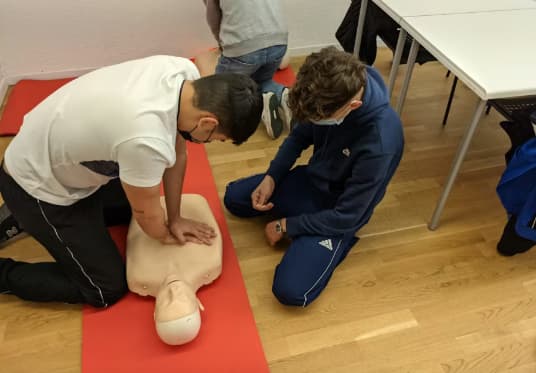
One of the most significant trends in 2026 is the rise of blended learning. This model allows you to complete the cognitive portion of the training—the videos, quizzes, and theory—online at your own pace. Once finished, you book a short, 30-minute “manikin session” with a certified instructor to prove you can actually perform the physical skills.
This approach addresses the primary criticism of online-only first aid training: the lack of tactile feedback. You can watch a hundred videos on how to perform the Heimlich maneuver, but until you feel the resistance of a physical body or the spring-back of a CPR manikin’s chest, your training is incomplete. Blended learning is often the most cost-effective and time-efficient way for busy professionals to get “hands-on” certified.
Comparing Leading Digital First Aid Platforms
| Provider Type | Best For | Pros | Cons |
| International NGO Apps | Quick reference in the field | Free, high credibility, offline mode | No formal certification issued |
| Blended Learning Portals | Professional certification | Flexible, hands-on testing, OSHA recognized | Requires a physical visit for testing |
| Video-Based Marketplaces | General knowledge | Very affordable, lifetime access | Often lacks peer review/accreditation |
| Niche Survival Apps | Wilderness/Remote aid | Specialized for hikers/campers | May focus on rare scenarios over basics |
User Interface and Accessibility
A life-saving tool is only useful if someone in a state of panic can operate it. When evaluating an app or a course portal, pay attention to the user interface (UI). Is the “Emergency” button prominent? Are the instructions written in plain language, avoiding overly complex medical jargon? For global users, the availability of multi-language support is also a critical factor.
Accessibility also refers to how the content is delivered. In 2026, the best courses use “Micro-learning” techniques—breaking down complex topics into three-to-five-minute segments. This method has been proven to increase long-term retention compared to traditional hour-long lectures. If you can learn how to treat a burn during a coffee break, you are much more likely to remember those steps months later when a real kitchen accident occurs.
Making Your Final Decision
Ultimately, the right choice depends on your goal. If you are a parent or a teacher, you should prioritize a course that includes a pediatric-specific module, as the techniques for infants and children differ significantly from those for adults. If you are a solo traveler, a robust, offline-capable app with a built-in GPS “emergency call” feature should be your top priority.
No digital tool can replace the instinct and calm of a trained human, but they are incredible force multipliers. By choosing a platform that is scientifically backed and easy to navigate, you are taking a proactive step toward the safety of your community. Knowledge is the one thing you want to have and never need, rather than need and never have.